
Execution Challenges in Marine Infrastructure Projects in BD
Let's See The Topics
Execution Challenges in Large-Scale Marine Infrastructure
Marine infrastructure projects demand careful coordination between engineering design, site conditions, equipment, and environmental factors. Unlike land-based construction, work takes place in shifting water conditions where timing, access, and stability constantly change. This makes execution one of the most complex phases of any marine development.
SIMEX Bangladesh has delivered multiple river and coastal projects where these challenges appear in real conditions. From jetty foundations to industrial waterfront structures, execution requires structured planning and strict control at every stage.
Unpredictable Site Conditions
One of the most common issues in marine construction is variation in site conditions. Soil properties under water often differ significantly from initial survey assumptions. In many river zones in Bangladesh, soft clay layers extend deeper than expected, which affects pile penetration and structural stability.
Current velocity and tidal movement also influence daily work output. In some coastal projects, work windows are limited to 4–6 hours per day due to tidal cycles. This directly impacts productivity and scheduling accuracy.
Projects handled by a Jetty construction company in Bangladesh often face these conditions, requiring continuous field adjustments instead of fixed execution plans.
Equipment Mobilization and Access Limitations
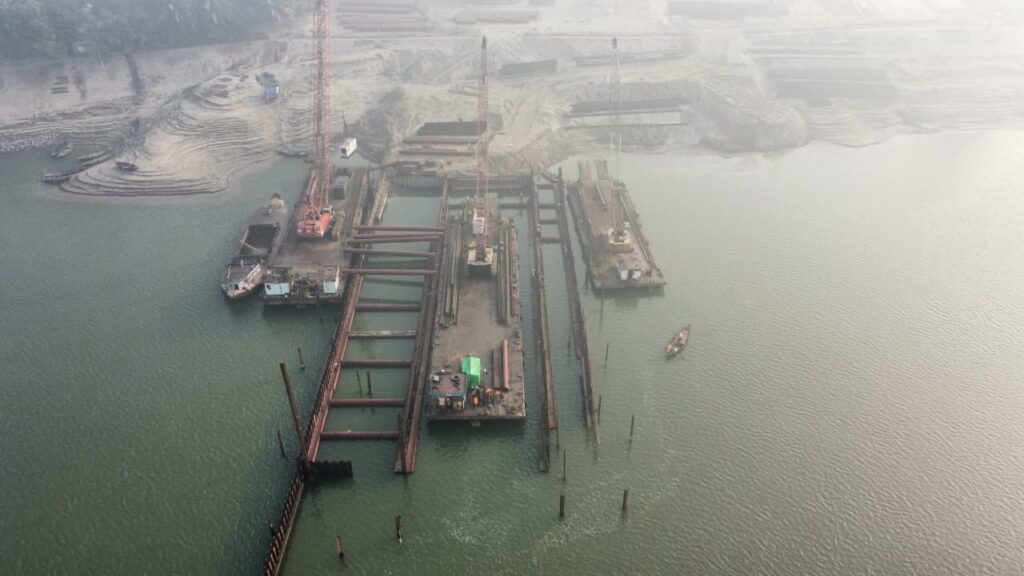
Marine sites are rarely accessible by standard road transport. Heavy equipment such as pile drivers, cranes, and barges must be transported through waterways. This increases dependency on weather conditions and logistics coordination.
Delays in mobilization can affect the entire project timeline. Even a single crane breakdown in a river site may stop all piling activities due to limited redundancy in marine environments.
In several projects, equipment setup and repositioning consume nearly 15–20% of total project time, especially in deep river channels.
Weather and Hydrological Disruptions
Weather is a major execution factor in marine infrastructure. Rainfall, upstream water flow, and wind conditions directly impact site safety and productivity.
In Bangladesh, monsoon periods often increase river discharge by 30–50%, creating unstable working conditions for piling and foundation work. Strong currents may shift temporary structures, requiring rework and additional reinforcement.
Such disruptions are common in projects handled by a marine construction company in Bangladesh, where scheduling flexibility becomes essential.
Structural Alignment and Pile Driving Accuracy
Accurate pile driving is critical for long-term stability. In water environments, maintaining vertical alignment becomes more difficult due to wave movement, soil inconsistency, and floating equipment instability.
Even small deviations in pile alignment can affect load distribution in jetty structures. In some cases, misalignment increases steel consumption by 5–8% due to corrective works.
Experienced teams working on a Jetty construction company in Bangladesh project often rely on guide frames, GPS-based positioning, and continuous monitoring to reduce such errors.
Safety Risks in Marine Execution
Safety management in marine infrastructure is more complex than in land construction. Workers operate on floating platforms, barges, and temporary structures with limited stability.
Common risks include:
- Slippery working surfaces
- Sudden water level changes
- Equipment swing during lifting operations
- Limited emergency access routes
According to industry observations, marine construction sites show a higher incident probability if safety planning is not strictly enforced during execution phases.
Coordination Between Engineering and Field Teams
Large marine projects require constant coordination between design engineers, site supervisors, and equipment operators. Any communication gap can lead to execution errors or rework.
For example, changes in pile length or spacing due to soil variation must be immediately updated in field execution. Without real-time coordination, material wastage and delays become unavoidable.
Projects managed under a port construction company in Bangladesh structure often require multiple stakeholders working in parallel, which increases coordination complexity.
Material Handling and Storage Challenges
Unlike land projects, material storage space in marine sites is extremely limited. Steel piles, reinforcement bars, and structural components must be stored on barges or temporary platforms.
Exposure to moisture and saline conditions can also affect material quality if not handled properly. Protective coatings and controlled storage methods are necessary to maintain durability.
In several coastal projects, improper storage has led to up to 3–5% material degradation, increasing overall project cost.
Case Insight from River Infrastructure Work
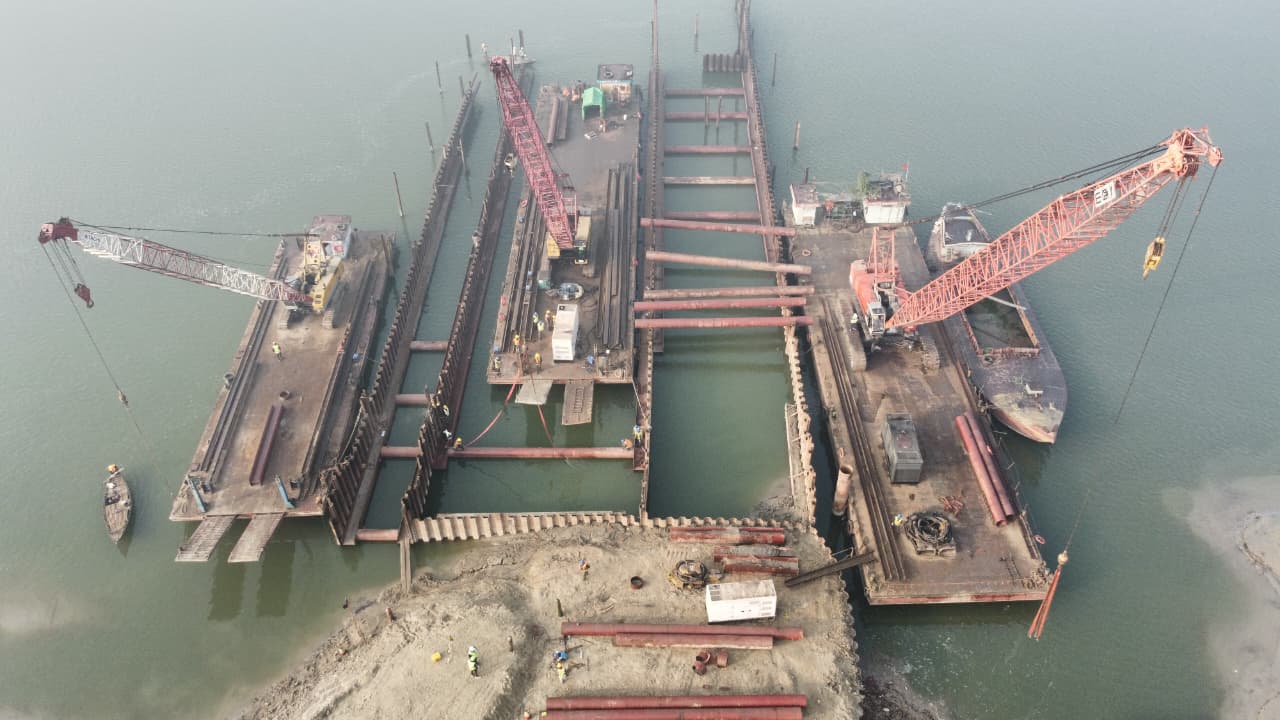
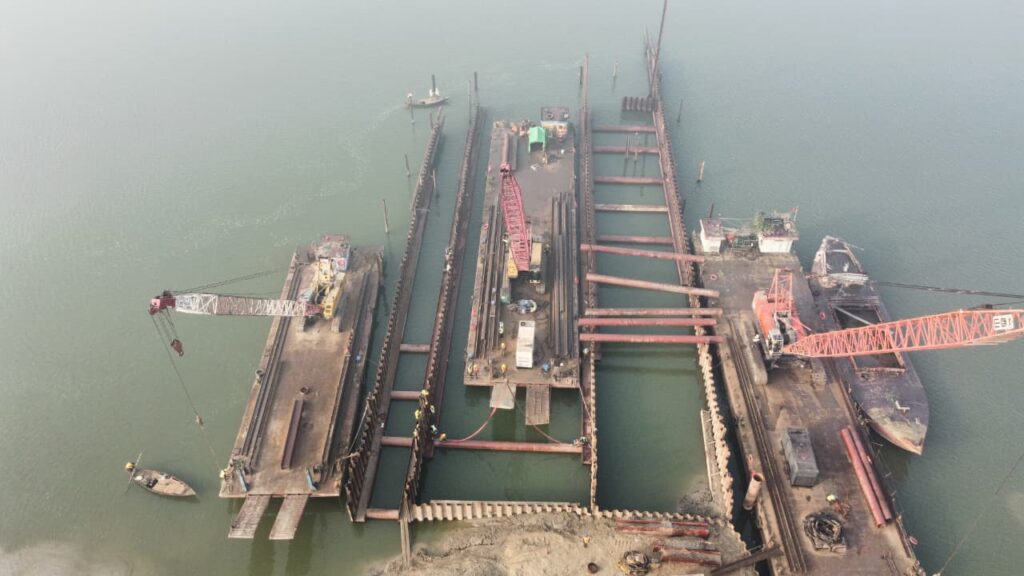
SIMEX Bangladesh has executed multiple river-based infrastructure projects where execution challenges were clearly visible. One example involved installation of sheet piles and cofferdam systems in an active river channel.
Key challenges included:
- Continuous sediment movement around foundation zones
- Restricted daily working hours due to tidal variation
- High coordination requirement between barge operations and piling crews
Despite these challenges, structured execution planning allowed the project to progress within controlled timelines without compromising structural integrity.
This type of work reflects the complexity faced by any river jetty contractor Bangladesh operating in similar environments.
Cost Impact of Execution Challenges
Execution challenges directly affect project cost. In marine infrastructure, delays often result in:
- Increased equipment rental duration
- Higher fuel consumption for marine vessels
- Additional manpower deployment
- Rework due to alignment or soil variation
Studies from regional infrastructure projects indicate that execution-related inefficiencies can increase total project cost by 12–18% if not managed properly.
Role of Technical Planning in Reducing Risk
Strong pre-execution planning significantly reduces marine construction risks. This includes:
- Detailed bathymetric surveys
- Soil investigation reports
- Hydrological flow analysis
- Equipment deployment planning
- Safety and contingency planning
Proper planning reduces unexpected site changes and improves execution consistency.
Importance of Experienced Marine Contractors
Marine infrastructure cannot be executed successfully without field experience. Contractors must understand river behavior, tidal movement, equipment limitations, and structural requirements.
A Jetty construction company in Bangladesh with proven execution experience can handle uncertainties better than teams relying only on theoretical planning.
Experience also helps in decision-making during unexpected site conditions, reducing downtime and improving productivity.
Final Thoughts on Execution Complexity
Large-scale marine infrastructure projects involve continuous coordination between engineering, environment, and execution teams. Challenges are not occasional but part of the working environment.
Success depends on preparation, equipment readiness, and field experience rather than fixed planning alone. Projects in river and coastal zones require adaptive execution methods to maintain quality and schedule control.
SIMEX Bangladesh continues to work in complex marine environments where execution discipline and technical knowledge play a central role in delivering stable infrastructure.