
Contractor Selection Mistakes in Jetty Projects and Costs
Let's See The Topics
Jetty projects involve far more than piling work, concrete structures, and marine equipment. These projects operate in environments where water conditions, soil behavior, weather patterns, logistics, and structural requirements interact continuously.
Because of that, contractor selection becomes one of the most important decisions during project planning.
A poorly selected contractor can create project delays, budget overruns, structural defects, safety concerns, and long-term maintenance issues. Many project owners focus heavily on pricing and overlook technical experience, marine capabilities, and execution planning.
The result is often a project that costs far more than initially expected.
Contractor selection mistakes continue to affect marine projects worldwide, particularly in river and coastal construction environments where field conditions remain unpredictable.
This article explains common contractor selection problems in jetty projects and how these mistakes affect project outcomes.
Choosing Based Mainly on the Lowest Price
One of the most frequent mistakes is selecting contractors primarily because of lower quotations.
Lower pricing often appears attractive during procurement stages. The problem begins when reduced cost comes from:
- Limited technical staffing
- Lower material standards
- Insufficient equipment availability
- Reduced supervision resources
- Incomplete project planning
Marine construction carries many hidden operational variables.
A contractor with unrealistically low pricing may struggle when actual field conditions become difficult.
Industry reviews suggest that projects awarded mainly through lowest-cost selection experience nearly 25–35% higher rates of cost adjustment during execution stages.
Initial savings sometimes create larger financial exposure later.
Ignoring Marine Construction Experience
Marine projects differ substantially from land-based construction work.
Jetty projects involve:
- Tidal conditions
- Water current behavior
- Floating equipment coordination
- Underwater foundation work
- Marine logistics management
Some contractors possess strong general construction experience but limited marine execution capability.
This creates problems once work begins.
Common issues include:
- Poor equipment sequencing
- Delayed marine operations
- Weak hydraulic planning
- Limited underwater execution knowledge
Marine construction experience directly affects productivity and decision-making under changing site conditions.
A contractor familiar only with standard building projects may face difficulties adapting to waterfront environments.
Failing to Verify Previous Project Performance
Many project owners review proposals carefully but spend less time reviewing actual project history.
Past performance often reveals practical information such as:
- Completion records
- Schedule consistency
- Safety performance
- Equipment capability
- Quality management practices
Project portfolios may appear strong on paper.
Actual field results sometimes tell a different story.
Construction industry observations indicate that contractors with inconsistent project histories face noticeably higher rates of schedule overruns compared with firms maintaining stronger performance records.
Verifying previous work helps reduce uncertainty during selection.
Overlooking Equipment Capability
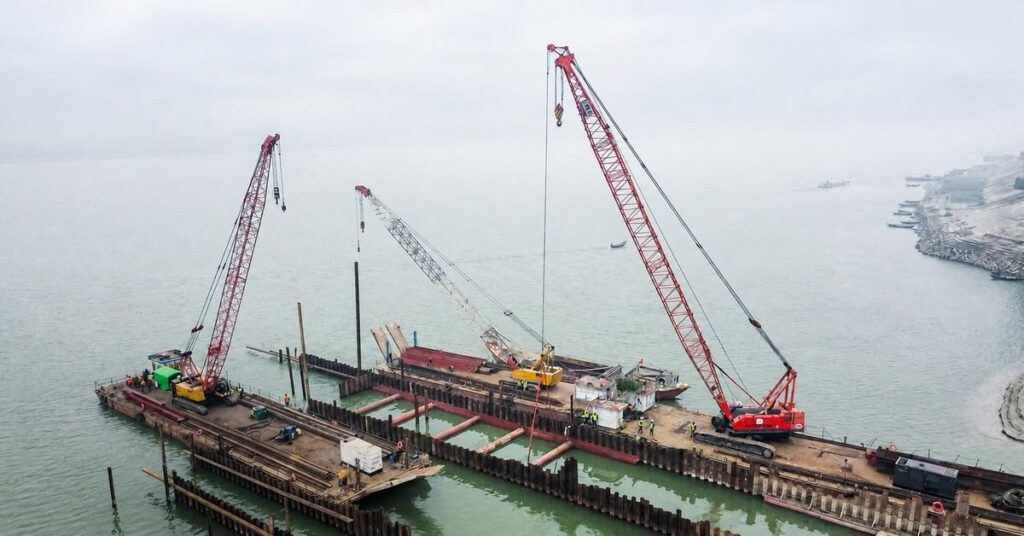
Jetty construction requires specialized equipment that cannot always be sourced quickly.
Projects commonly depend on:
- Crane barges
- Piling rigs
- Floating platforms
- Marine support vessels
- Tugboats
Some contractors rely heavily on outsourced machinery.
This creates risk if equipment becomes unavailable or scheduling conflicts occur.
Limited equipment access affects:
- Mobilization timing
- Productivity
- Construction sequencing
- Project scheduling
Without proper equipment planning, delays begin spreading across the project.
Equipment capability should receive the same attention as pricing and technical proposals.
Weak Evaluation of Site Management Teams
Contractors often present experienced senior staff during bidding stages.
Actual site execution may involve different personnel.
This creates challenges if site management teams lack experience in:
- Marine safety supervision
- Equipment coordination
- Scheduling control
- Technical problem solving
Field management directly affects daily productivity.
A marine construction review found that projects with experienced site supervision teams completed activities with fewer execution disruptions and lower rework rates.
Project owners should review not only company reputation but also the individuals responsible for field execution.
Ignoring Safety Performance Records
Marine projects involve elevated operational risk.
Workers operate near:
- Water bodies
- Heavy lifting equipment
- Floating platforms
- Changing weather conditions
Weak safety systems increase:
- Accident risk
- Equipment damage
- Work stoppages
- legal complications
Safety issues affect both schedule and project cost.
Contractors should demonstrate:
- Safety documentation
- Emergency planning systems
- Training procedures
- Marine operational protocols
Companies with poor safety history often create long-term operational challenges.
Poor Review of Financial Stability
Contractor financial condition plays a larger role than many project owners realize.
Financial instability creates risks such as:
- Delayed material procurement
- Payroll interruptions
- Equipment shortages
- Supplier payment disputes
Marine projects require continuous resource availability.
Cash flow problems often spread rapidly through operations.
Some contractors appear technically capable but struggle financially during long-duration projects.
Reviewing financial strength reduces future uncertainty.
Lack of Understanding About Local Conditions
River and coastal environments vary substantially across locations.
Contractors unfamiliar with local conditions may underestimate:
- Seasonal weather changes
- River behavior
- Transport restrictions
- Regulatory procedures
Local experience improves planning accuracy.
For example, contractors working regularly within Bangladesh often understand:
- Monsoon-related disruptions
- River sediment behavior
- Local marine access limitations
- Site mobilization challenges
These details affect scheduling and operational planning.
A contractor with strong international credentials but weak local experience may still face practical difficulties.
Weak Communication During Procurement Stages
Communication problems often begin before construction starts.
Some warning signs include:
- Delayed responses
- Incomplete technical clarification
- Unclear project methodology
- Weak planning documentation
These early signals frequently continue during execution.
Communication gaps create confusion around:
- Scope changes
- Scheduling updates
- Equipment coordination
- Site decision-making
Projects involving multiple stakeholders require strong communication systems from the beginning.
Focusing Only on Current Requirements
Some project owners evaluate contractors only based on immediate construction needs.
Long-term considerations often receive less attention.
Examples include:
- Maintenance requirements
- Future expansion plans
- Structural lifecycle considerations
- Operational flexibility
Jetty structures usually serve long-term industrial purposes.
Selecting contractors with only short-term delivery focus may increase maintenance burden later.
Long-term thinking often creates stronger project value.
Poor Understanding of Technical Proposal Details
Technical submissions contain important information beyond pricing.
Areas requiring detailed review include:
- Construction methodology
- Equipment allocation plans
- Project scheduling logic
- Safety systems
- Resource deployment strategies
Some project teams focus heavily on financial proposals and spend limited time reviewing technical details.
This creates gaps in decision-making.
Several marine procurement studies suggest that technical proposal weaknesses contribute heavily to later project execution problems despite competitive pricing structures.
Experience Matters in Marine Construction
Marine construction environments create challenges that cannot always be predicted from drawings and reports.
Contractors regularly face:
- Water level variation
- Equipment movement restrictions
- Soil uncertainty
- Weather disruptions
Experience improves decision-making during these situations.
Organizations seeking a reliable Jetty construction company in Bangladesh often evaluate both engineering capability and practical field experience before finalizing project partnerships.
SIMEX Bangladesh supports marine infrastructure projects with planning, construction supervision, and execution experience for complex site environments.
Final Thoughts
Contractor selection decisions affect every phase of a jetty project.
Many project failures begin long before equipment reaches the construction site. Weak evaluation methods, unrealistic cost expectations, and incomplete review processes often create avoidable problems.
Marine construction involves changing environmental conditions, specialized equipment, and technical coordination that demand practical experience.
Choosing the right contractor is not simply a procurement task. It is one of the most important project decisions affecting safety, cost control, and long-term performance.
Careful evaluation during early planning stages usually prevents far larger problems later in the project lifecycle.