
Failure Risks in Cofferdam Construction Under Real Site Conditions
Let's See The Topics
Failure Risks in Cofferdam Construction Under Real Site Conditions
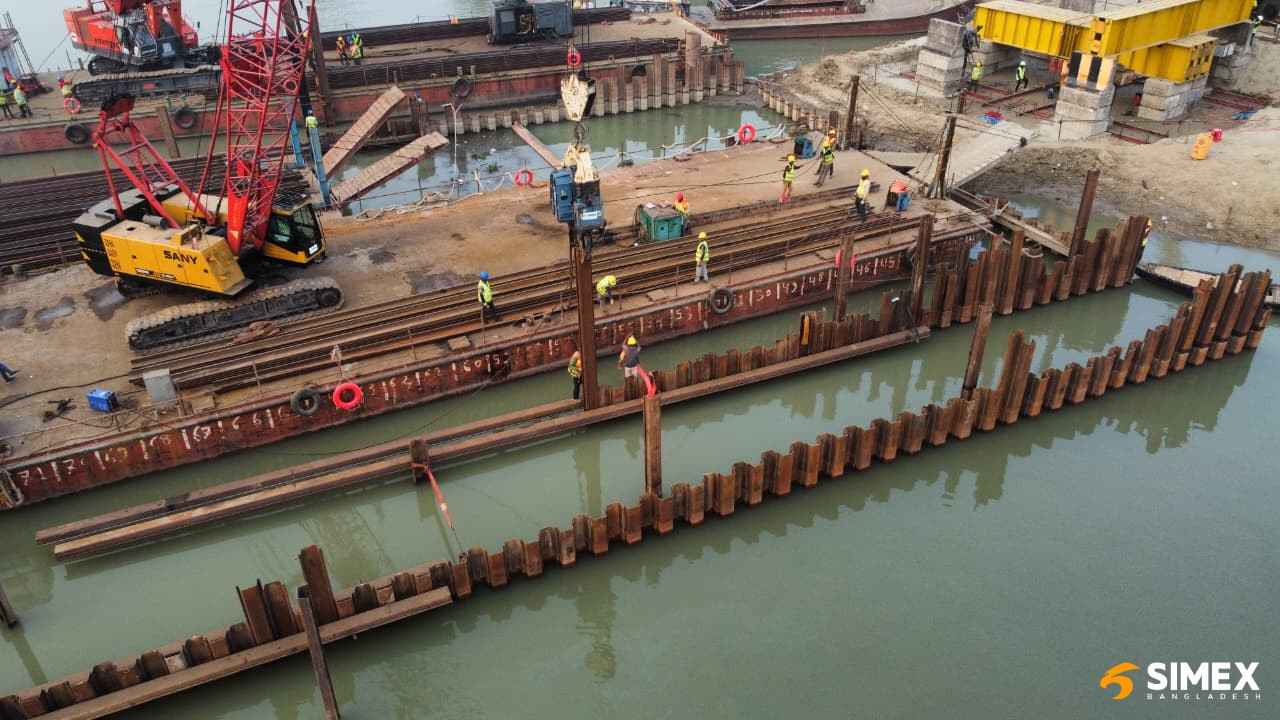
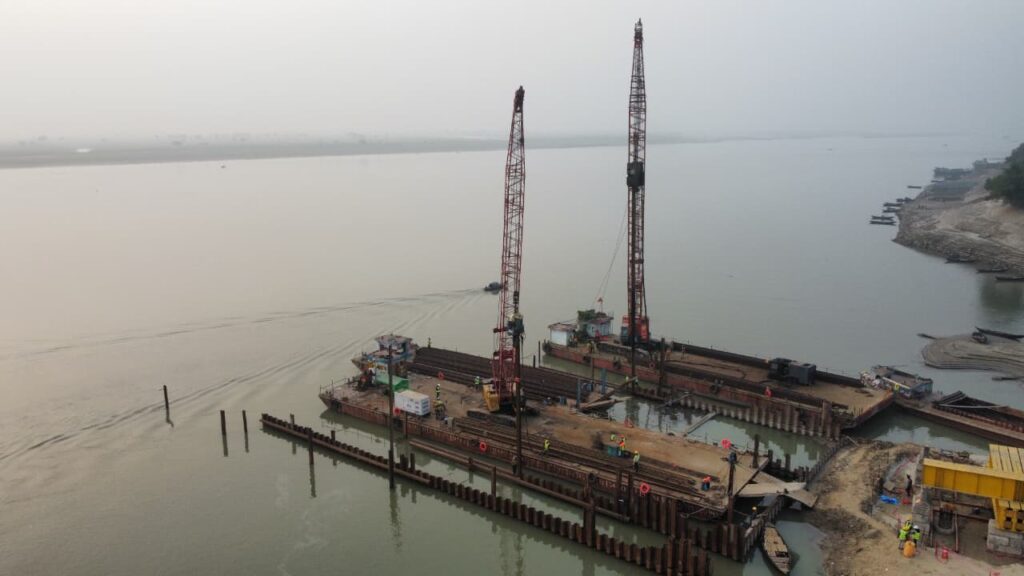
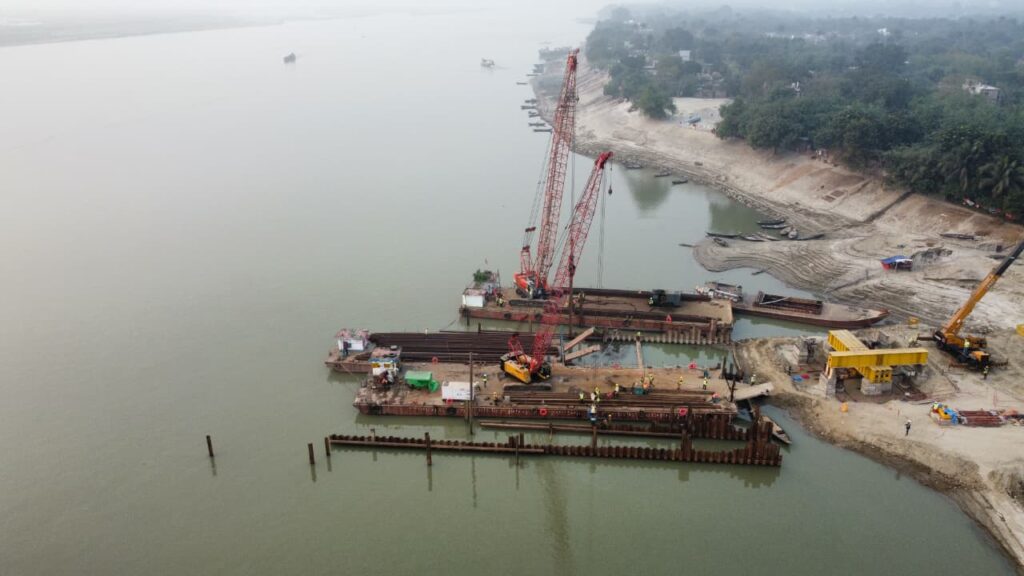
Cofferdams play a critical role in marine, river, bridge, and water infrastructure projects. They create a temporary dry work area by holding back water, allowing engineers to carry out excavation, foundation construction, pipeline installation, and structural works safely. While the concept appears straightforward, real-world project conditions often introduce challenges that can lead to costly failures if not properly addressed.
For projects involving rivers, ports, bridges, intake structures, and marine foundations, working with an experienced Cofferdam construction company in Bangladesh is one of the first steps toward reducing construction risks. Proper engineering, site investigation, installation methods, and monitoring procedures can prevent many of the failures commonly seen in field conditions.
Many project owners focus on design calculations but underestimate the effect of changing river conditions, soil variability, water pressure, weather events, and construction sequencing. These factors often determine whether a cofferdam performs as intended or develops serious structural problems during execution.
Why Cofferdam Failures Occur More Frequently on Site Than on Paper
Engineering calculations are based on assumptions. Site conditions are often different from those assumptions.
A cofferdam designed for a specific groundwater level may suddenly face increased hydraulic pressure after heavy rainfall. Soil layers identified during investigation may vary across the site. Equipment limitations may affect installation accuracy.
According to reports from major marine infrastructure projects worldwide, temporary works failures account for nearly 30% of construction-related structural incidents during foundation works. A considerable percentage of these incidents are linked to water control systems, excavation support structures, and cofferdams.
The difference between design assumptions and field realities is often where problems begin.
Inadequate Site Investigation
One of the most common causes of cofferdam failure is incomplete geotechnical investigation.
Many projects rely on limited borehole data. A few soil samples may not accurately represent conditions across the entire construction area. Unexpected layers of soft clay, loose sand, peat, or buried debris can create instability after construction begins.
When actual soil strength differs from design assumptions, sheet piles may experience larger lateral movements, excessive settlement, or reduced resistance against water pressure.
A detailed geotechnical investigation helps identify:
- Soil stratification
- Groundwater conditions
- Bearing capacity
- Scour potential
- Seepage risks
- Liquefaction susceptibility
Skipping this stage often creates problems later in the project.
Hydrostatic Pressure Miscalculations
Water pressure is one of the most powerful forces acting on a cofferdam.
Even a small increase in water level can substantially increase lateral loads on retaining structures. During monsoon seasons, river water levels may rise several meters within days.
When hydrostatic pressure exceeds design capacity, failures may occur through:
- Wall deflection
- Structural deformation
- Joint separation
- Sheet pile displacement
- Bracing failure
In many river construction projects, water levels fluctuate more than anticipated during planning stages.
Engineering teams must account for seasonal variations rather than relying solely on average water levels.
Seepage and Piping Failures
Water rarely remains completely outside a cofferdam.
Seepage occurs when water flows through soil beneath or around the retaining structure. If uncontrolled, seepage can gradually remove soil particles and create underground channels.
This process is known as piping.
Piping can result in:
- Loss of ground support
- Base heave
- Sudden flooding
- Excavation collapse
- Structural instability
Studies from temporary marine works indicate that seepage-related issues contribute to nearly 20% of reported cofferdam incidents.
Proper embedment depth, cutoff walls, and dewatering systems help control these risks.
Insufficient Sheet Pile Penetration
Sheet piles are often used to construct cofferdams in river and marine environments.
Their effectiveness depends heavily on penetration depth.
If sheet piles are not driven deep enough:
- Water may pass beneath the wall
- Soil movement may increase
- Structural resistance decreases
- Stability factors become inadequate
Real site conditions frequently include harder soil layers or obstructions that prevent full penetration.
Contractors sometimes stop driving before reaching the specified depth due to equipment limitations or schedule pressure.
This decision can create long-term stability concerns throughout the project duration.
Bracing and Strutting Failures
Many large cofferdams rely on internal bracing systems.
These systems resist lateral loads from soil and water pressure. Any weakness in the bracing arrangement can trigger progressive failure.
Common causes include:
- Improper installation
- Incorrect welding
- Material defects
- Misalignment
- Overloading
A single failed brace can transfer excessive loads to neighboring members, creating a chain reaction throughout the structure.
Regular inspections during excavation are necessary because loads change as excavation depth increases.
Base Heave During Excavation
Base heave occurs when upward pressure beneath the excavation exceeds the weight of overlying soil.
This problem is particularly common in soft clay deposits.
As excavation progresses, soil at the bottom may begin to lift upward. The movement can damage foundations, destabilize retaining structures, and create unsafe working conditions.
Signs of potential base heave include:
- Ground swelling
- Cracks in excavation areas
- Excessive settlement nearby
- Increased water inflow
Engineers often use staged excavation and groundwater control measures to reduce this risk.
River Scour and Erosion
River environments are constantly changing.
Flow velocity around a cofferdam can create localized erosion known as scour. This process removes soil from around the foundation and sheet pile system.
Scour depth often increases during:
- Heavy rainfall
- Flood conditions
- High river discharge
- Tidal changes
- Strong currents
Research on river engineering projects shows that scour can account for more than 40% of foundation-related failures in temporary water-retaining structures.
Continuous monitoring is necessary, particularly during monsoon periods.
Equipment and Installation Errors
Even a well-designed cofferdam can fail because of installation mistakes.
Construction quality directly affects performance.
Common errors include:
- Incorrect sheet pile alignment
- Damaged interlocks
- Incomplete welds
- Poor bracing connections
- Uneven driving depths
Installation tolerances that seem minor can become serious structural issues once water pressure increases.
Experienced construction teams follow strict quality control procedures throughout installation.
Unexpected Weather Events
Weather remains one of the least predictable factors in marine construction.
Storms, heavy rainfall, cyclones, and flash floods can place extraordinary demands on temporary structures.
In South Asian river projects, sudden weather events regularly alter:
- Water levels
- Flow velocity
- Soil conditions
- Site accessibility
A cofferdam designed for normal conditions may face loads far beyond initial estimates during extreme weather.
Contingency planning should always be included in project execution strategies.
Human Factors and Project Management Issues
Technical failures are not always caused by engineering mistakes.
Project management issues contribute to many incidents.
Examples include:
- Poor communication between teams
- Inadequate supervision
- Schedule pressure
- Delayed inspections
- Lack of emergency planning
Many failure investigations reveal that warning signs were visible before the incident occurred.
The problem was not the absence of information but the failure to act on it.
The Cost of Cofferdam Failure
When a cofferdam fails, the consequences extend far beyond repair costs.
Potential impacts include:
- Project delays
- Equipment damage
- Material losses
- Worker safety incidents
- Contractual disputes
- Environmental penalties
Industry estimates suggest that major temporary works failures can increase project costs by 10% to 25%, depending on project size and location.
For large marine infrastructure projects, the financial impact can reach millions of dollars.
Risk Reduction Strategies
Reducing cofferdam failure risks requires attention throughout the project lifecycle.
Successful projects generally follow several key practices:
Detailed Site Investigation
Accurate geotechnical and hydrological data provide the foundation for safe design.
Conservative Design Approach
Temporary structures should account for changing field conditions, not just average values.
Quality Material Selection
Sheet piles, bracing systems, and structural components should meet project requirements.
Continuous Monitoring
Movement, water pressure, and seepage should be monitored throughout construction.
Skilled Construction Teams
Experienced installation crews reduce the likelihood of execution-related failures.
Emergency Preparedness
Every cofferdam project should include a response plan for flooding, structural movement, and severe weather.
Final Thoughts
Cofferdam construction is one of the most challenging aspects of marine and river engineering. While design calculations provide the starting point, actual site conditions determine long-term performance. Soil variability, water pressure, seepage, scour, weather events, and construction quality all influence project success.
Understanding these risks before construction begins allows project teams to make better engineering decisions, improve safety, and avoid costly disruptions. The most successful projects are those that treat temporary works with the same level of attention given to permanent structures.
For infrastructure projects involving rivers, marine facilities, bridge foundations, intake structures, or waterfront developments, careful planning and experienced execution remain the strongest defense against cofferdam failure.