
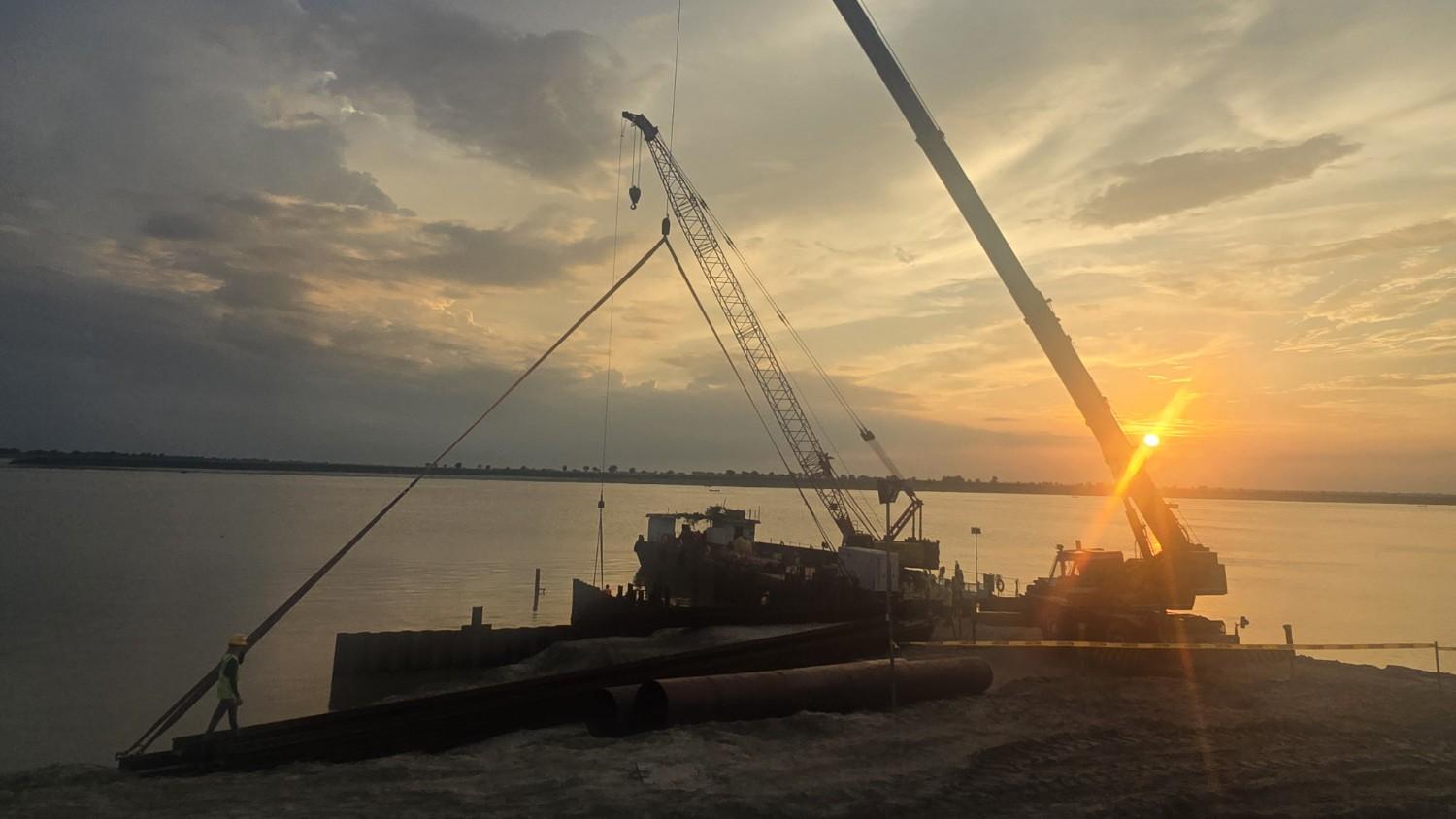
How Sheet Pile Walls Work in Soft and Waterlogged Ground
Let's See The Topics
Soft and waterlogged ground can make construction work much harder. Soil may have low bearing capacity, groundwater can enter excavations quickly, and nearby structures may be exposed to soil movement. For projects in these conditions, steel sheet pile walls are often used to retain soil and create a controlled working area.
If you are planning a project that requires specialist installation, a Sheet pile company in Bangladesh can assess the site conditions, pile requirements, installation method, and equipment needed before work begins.
But how exactly do sheet pile walls work when the ground is soft and full of water? The answer depends on how the interlocking steel sections interact with the surrounding soil, groundwater, and structural support system.
What Is a Sheet Pile Wall?
A sheet pile wall is made by driving interlocking steel sections into the ground to form a continuous barrier. Each pile connects with the next through interlocks along its edges.
Unlike individual piles that mainly transfer structural loads into deeper soil, sheet piles are commonly used to retain soil and control the movement of earth and water.
A sheet pile wall may be used for:
- Deep excavation support
- Riverbank protection
- Cofferdams
- Bridge foundation work
- Basement excavation
- Waterfront and jetty construction
- Temporary construction support
The wall’s performance depends on pile section, embedment depth, soil characteristics, groundwater level, excavation depth, and the support arrangement used by the project engineer.
Why Soft Ground Creates Construction Problems
Soft soil generally has lower resistance to movement than dense soil or rock. Depending on the site, it may contain clay, loose sand, silt, fill material, or layers of saturated soil.
When excavation starts, the soil on the retained side pushes toward the open excavation. If the retaining system is not properly designed, the soil can move into the excavation.
Water creates another problem. Saturated soil can exert hydrostatic pressure against the wall. Groundwater may also flow through permeable soil layers and enter the excavation.
In some locations, lowering groundwater can change the pressure conditions in the surrounding soil. This is why groundwater conditions need to be considered before selecting a sheet pile arrangement.
How Sheet Piles Hold Back Soft Soil
When sheet piles are installed below the required excavation level, the embedded portion provides resistance against soil movement.
The basic working principle is simple:
- Steel sheets are installed along the planned wall line.
- Interlocks connect the individual sheets.
- The embedded section remains below the excavation level.
- Soil pressure acts against the wall.
- The embedded portion and any additional support system resist movement.
The depth of embedment is not selected simply by looking at excavation depth. Engineers assess soil layers, earth pressure, groundwater, surcharge loads, wall movement, and other site conditions before deciding the required depth.
How Sheet Piles Help With Groundwater
Sheet piles can also act as a barrier against groundwater movement. Their interlocking arrangement reduces the open paths through which soil and water can move into an excavation.
This does not mean every sheet pile wall is completely watertight. Water can still pass through interlocks, gaps, soil layers, or defects depending on installation quality and site conditions.
For projects where water control is a major concern, engineers may combine sheet piles with pumping, drainage, sealing methods, or other temporary works.
The right combination depends on the groundwater level, soil permeability, excavation depth, river conditions, and project requirements.
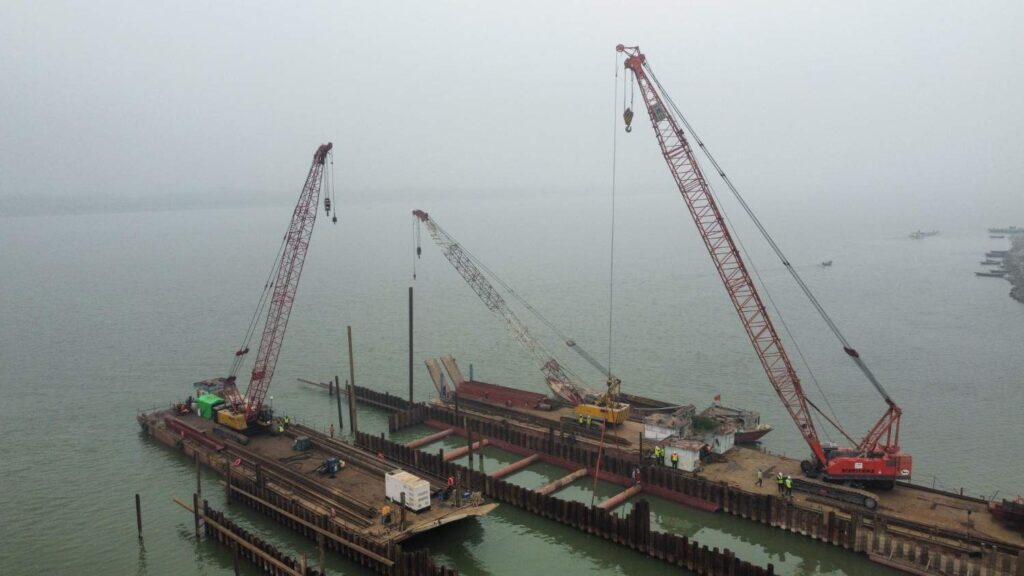
Sheet Pile Walls in Waterlogged Construction Sites
Waterlogged ground is common in areas with a high groundwater table, flood-prone locations, riverbanks, and sites with poorly drained soil.
Before installation, the project team normally needs information about:
- Groundwater level
- Soil profile
- Soil strength
- Water flow conditions
- Excavation depth
- Nearby structures
- Expected construction loads
A geotechnical investigation can provide much of this information. Boreholes, soil tests, groundwater observations, and site surveys can help engineers understand how the ground may respond during excavation.
This information is particularly important when construction takes place close to roads, buildings, pipelines, or existing foundations.
How Sheet Pile Installation Is Carried Out
Installation normally begins with setting out the wall alignment. The piles are then positioned and driven into the ground using suitable equipment.
Depending on the project, installation may involve vibratory hammers or impact hammers. Equipment selection depends on pile type, ground conditions, required penetration, access, and potential effects on surrounding structures.
The interlocks need to remain properly engaged as installation progresses. Poor alignment can make subsequent piles difficult to install and may affect the final wall arrangement.
For this reason, experienced sheet pile contractors in Bangladesh need to consider both the engineering requirements and actual site conditions during installation.
The Role of a Sheet Pile Driver
A sheet pile driver applies the force needed to push or drive the steel sections into the ground. Different projects can require different types of driving equipment.
A sheet pile driver in Bangladesh may be selected based on factors such as:
- Soil resistance
- Required pile depth
- Pile section
- Site access
- Available working space
- Nearby buildings and structures
- Noise and vibration restrictions
For soft soil, installation can sometimes be easier than driving into dense gravel or hard strata. Yet soft ground can present other challenges, such as wall movement, difficult alignment, groundwater flow, and insufficient soil resistance.
The installation method therefore needs to match the actual ground conditions rather than relying on a standard approach for every site.
What Happens After Excavation Starts?
Once the sheet pile wall is installed, excavation can begin in stages according to the project plan.
For deeper excavations, additional support may be required. Depending on the design, this can include walers, struts, anchors, or other structural systems.
The purpose is to control wall movement as excavation progresses.
Site monitoring is also useful. Engineers and site teams may check wall alignment, groundwater levels, excavation conditions, and movement of nearby structures where required.
If unexpected soil or groundwater conditions appear, the construction team may need to reassess the planned excavation sequence or water-control measures.
How Deep Should Sheet Piles Be Installed?
There is no single depth that works for every waterlogged or soft-soil project.
For example, a shallow excavation in firm soil may require a very different pile arrangement from a deep excavation beside a river.
Engineers consider:
- Excavation depth
- Soil strength and layering
- Groundwater pressure
- Earth pressure
- Surcharge from nearby roads or structures
- Required wall movement limits
- Pile section and stiffness
- Support conditions
- Installation constraints
The embedded portion needs to provide enough resistance for the expected loading conditions. Simply installing a pile deeper does not automatically solve every stability or groundwater problem.
Common Problems During Sheet Piling in Soft Ground
Several issues can appear when sheet piles are installed in saturated or weak soil.
Pile deviation:
Soft layers can sometimes make it difficult to maintain the planned alignment.
Interlock problems:
Damaged or improperly engaged interlocks can affect the continuity of the wall.
Ground movement:
Excavation can cause surrounding soil to move, particularly when support and excavation sequencing are inadequate.
Groundwater inflow:
Water may enter through interlocks, permeable layers, or gaps around the wall.
Unexpected soil layers:
Actual ground conditions may differ from assumptions based on limited investigation data.
These problems show why site investigation, suitable equipment, proper installation procedures, and construction monitoring need to work together.
Choosing the Right Sheet Pile Approach
A sheet pile wall should be treated as part of the complete temporary or permanent works plan. Pile selection is only one part of the process.
For a project in soft or waterlogged ground, the project team should consider the soil report, groundwater conditions, excavation requirements, pile section, installation equipment, support system, and construction sequence.
Experienced Sheet pile driving services can help project owners and contractors plan the practical side of installation while working according to the project’s engineering requirements.
Final Thoughts
Sheet pile walls work in soft and waterlogged ground by creating a continuous steel retaining barrier that resists soil movement and can reduce groundwater entry into the excavation area. Their performance depends on much more than the steel sections themselves.
Ground investigation, pile selection, embedment depth, installation equipment, interlock condition, excavation sequence, and water-control measures all have a role in the final result.
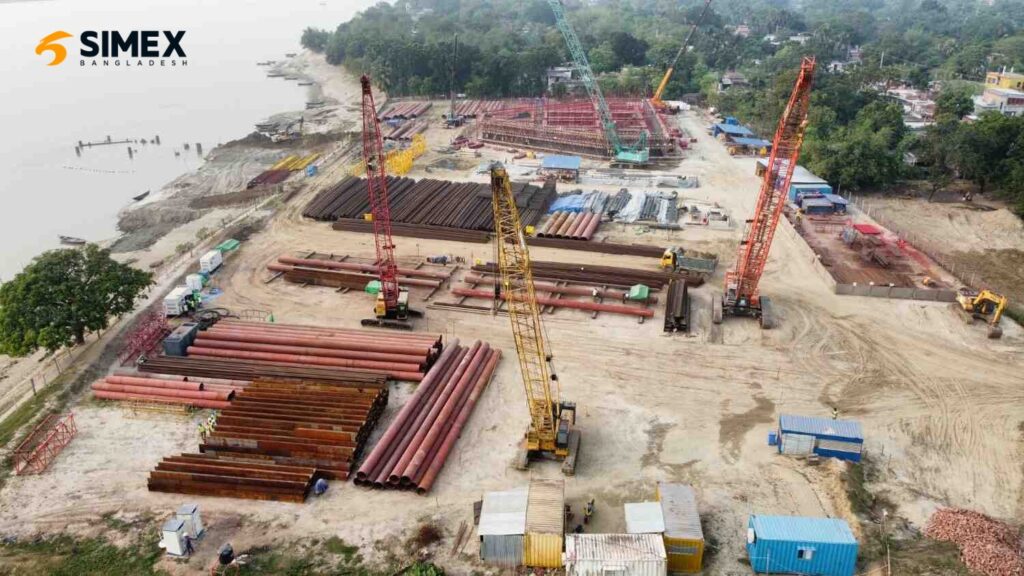
For construction projects in Bangladesh involving deep excavation, riverbanks, bridge foundations, cofferdams, or waterfront work, SIMEX Bangladesh provides sheet piling support based on project and site requirements.