
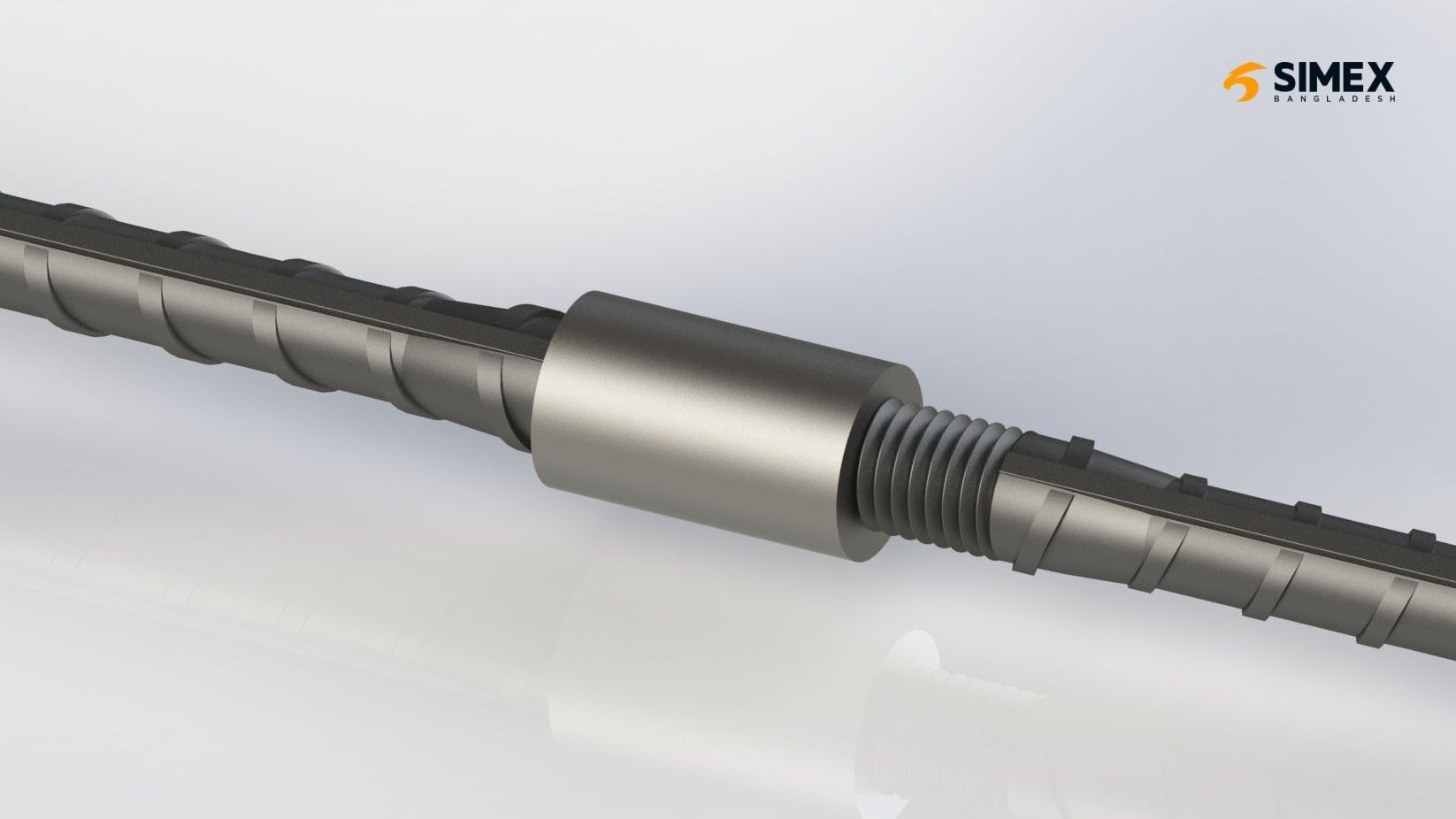
1. Threaded Couplers
Each bar end is threaded either with a tapered or parallel thread profile and then screwed into an internally threaded steel sleeve until fully seated. This is the most widely used coupler type because the connection is precise, repeatable, and easy to inspect visually once installed
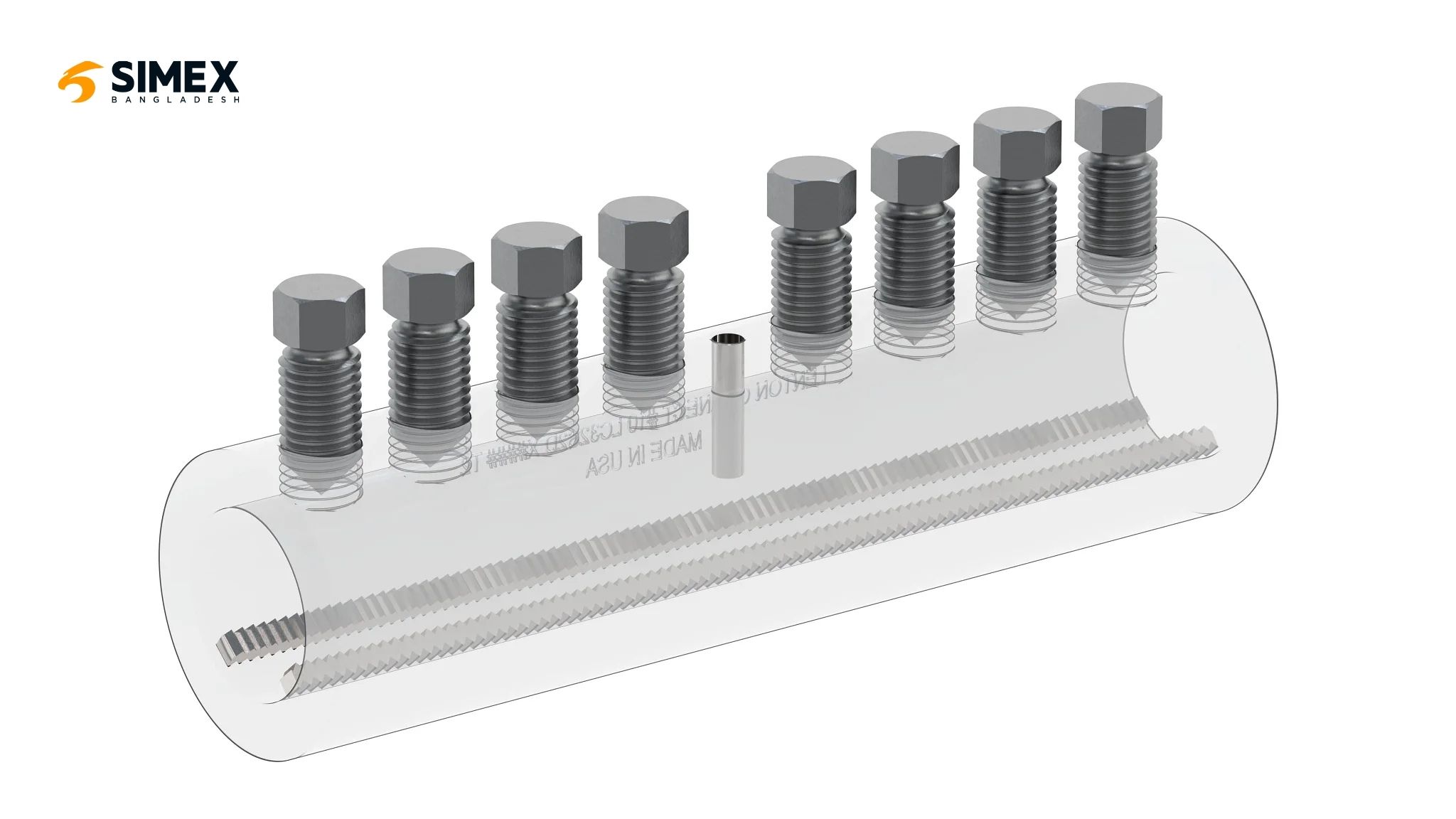
2. Shear-Bolt (Bolted/Wedge) Couplers
Instead of threading the bar, bolts or wedges inside the sleeve clamp directly onto a plain, unprepared bar end and are torqued (often until the bolt heads shear off) to lock the bar firmly in place.
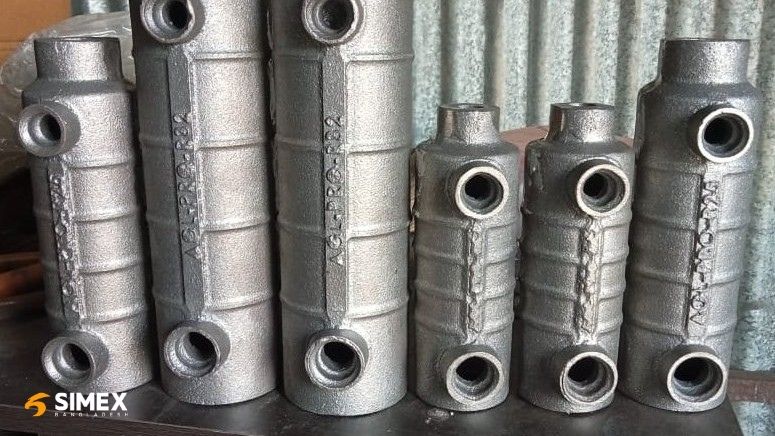
3. Grouted Sleeve Couplers
The bar end is slid into a steel sleeve, and a high-strength, non-shrink grout or epoxy is then injected into the gap between the bar and the sleeve wall. Once the grout cures, the bar is locked in place through both mechanical interlock and bond strength.
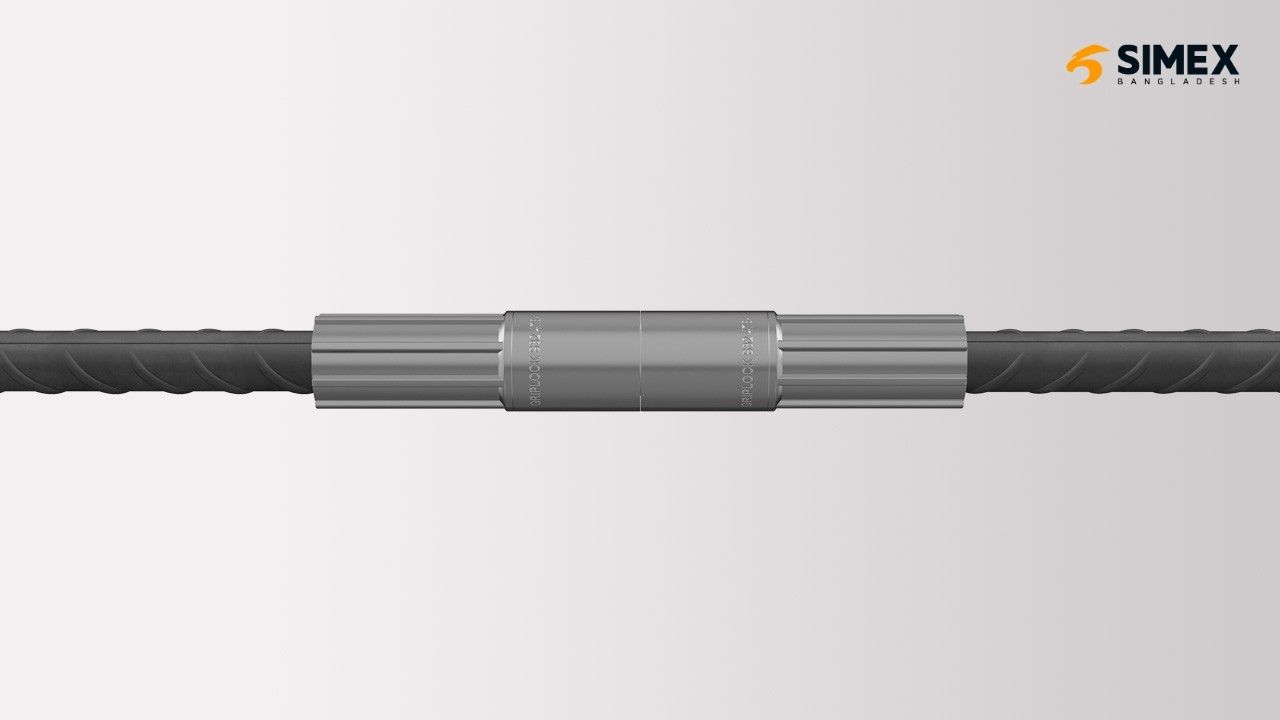
4. Cold-Swaged Couplers
A steel sleeve is fitted over the two bar ends to be joined, then hydraulically pressed or "swaged" under extremely high pressure until the sleeve deforms and grips the bar's deformation pattern tightly. The result is a strong, permanent mechanical bond formed without heat or threading.
Rebar couplers provide a reliable and efficient method for joining reinforcing bars in concrete structures. Unlike traditional lap splicing, couplers create a direct mechanical connection between bars, improving structural performance while reducing material usage. They are widely used in high-rise buildings, bridges, industrial facilities, and infrastructure projects where strength, quality, and construction efficiency are critical.
Higher Structural Strength – Transfers loads directly between reinforcement bars, ensuring strong and reliable connections.
Reduced Steel Consumption – Eliminates the need for long lap lengths, helping to lower reinforcement costs.
Faster Installation – Mechanical splicing can be completed quickly, reducing construction time and labor requirements.
Improved Concrete Placement – Minimizes reinforcement congestion, allowing concrete to flow more easily around bars.
Quality Assurance – Connections can be visually inspected and tested to ensure compliance with project specifications.
Space Saving Solution – Ideal for heavily reinforced areas such as columns, beams, foundations, and shear walls.
Suitable for Seismic Applications – Provides dependable performance in structures subjected to dynamic and earthquake loads.
Cost-Effective Construction – Reduces material waste, labor costs, and project delays.
Versatile Applications – Available in various types to suit new construction, precast concrete, retrofit projects, and industrial structures.
Enhanced Durability – Creates secure, long-lasting connections that maintain structural integrity throughout the life of the structure.
As construction projects become larger and more complex, engineers and contractors are increasingly choosing rebar couplers as a more efficient alternative to traditional lap splicing. By creating a direct mechanical connection between reinforcement bars, couplers improve structural performance while reducing material consumption and site congestion.
Improved Structural Integrity
Rebar couplers provide a direct load path between reinforcement bars, ensuring reliable force transfer throughout the structure.
Reduced Reinforcement Congestion
Unlike lap splices, couplers eliminate the need for extended overlap lengths, creating more space within concrete members and allowing for easier concrete placement.
Lower Steel Consumption
By removing the requirement for lengthy overlaps, rebar couplers help reduce overall steel usage, leading to more economical construction.
Faster Construction Process
Mechanical splicing is quicker to install than conventional lap splicing, helping contractors improve productivity and meet project deadlines.
Better Quality Control
Coupler connections can be inspected and verified more easily, ensuring consistent installation quality across the project.
Ideal for Modern Construction Projects
Rebar couplers are particularly beneficial in high-rise buildings, bridges, industrial facilities, marine structures, and other projects where space, strength, and efficiency are critical.
Direct mechanical connection between reinforcement bars
Reduced steel wastage and material costs
Improved concrete flow and compaction
Faster and more efficient installation
Enhanced structural performance
Easier inspection and quality assurance
Suitable for heavily reinforced sections
Preferred solution for large-scale infrastructure projects
By combining strength, efficiency, and cost-effectiveness, rebar couplers have become the preferred reinforcement joining solution for modern construction projects worldwide.
Our couplers are used across:
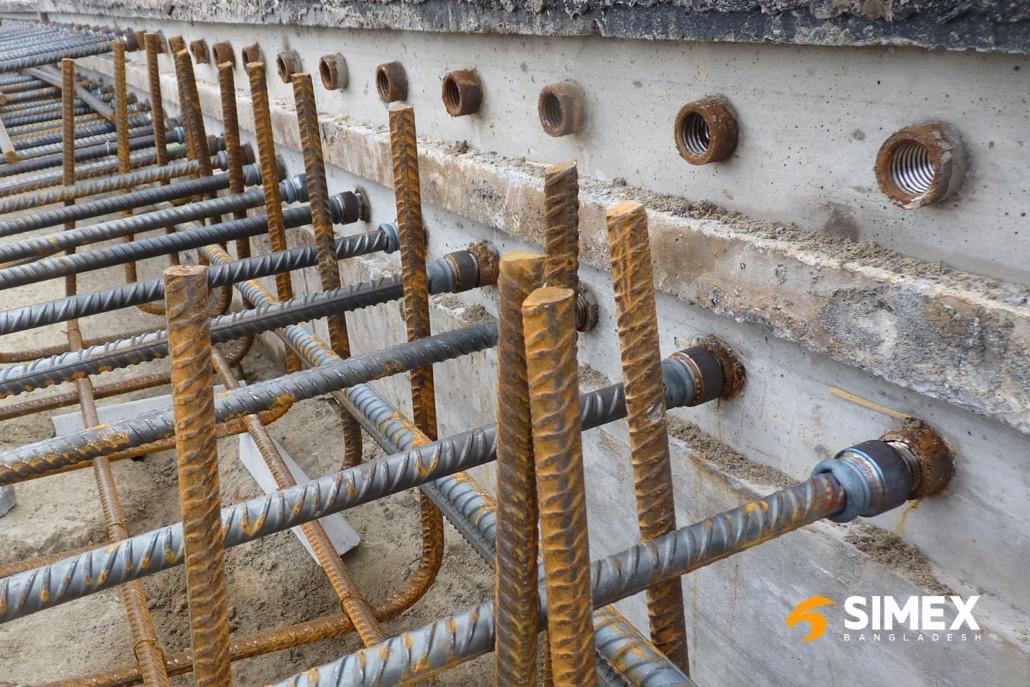
Manufactured In-House, Tested for Performance Every coupler is produced and quality-checked in our own factory in Rajbari, not outsourced giving us direct control over material, machining tolerance, and connection quality from raw bar to finished product.
Full Range Under One Roof We manufacture all four major coupler types Threaded, Bolted/Wedge, Grouted/Sleeve, and Cold-Swaged so projects can source the right connection method for every part of a build from a single supplier, instead of juggling multiple vendors.
Built for the Job Site Our couplers are designed for straightforward installation, helping crews save time on splicing without compromising joint strength.
Reliable Supply With our own production line, we can support both small orders and large-volume project requirements without relying on imported stock or third-party manufacturers.
Local Manufacturing, Local Support Being based in Rajbari means faster turnaround, easier communication, and support that understands the specific needs of projects across Bangladesh.
Need production capacity details, pricing, or technical guidance?
Our Engineer is ready to assist you with:
Eng. Israt Fatema Shupti (Assistant Project Coordinator)
B.Sc in Civil and Environmental
Engineering, North South University
Phone / WhatsApp: +880 173 333 1042
Email: [email protected]
Head of Business: +880 173 333 1033